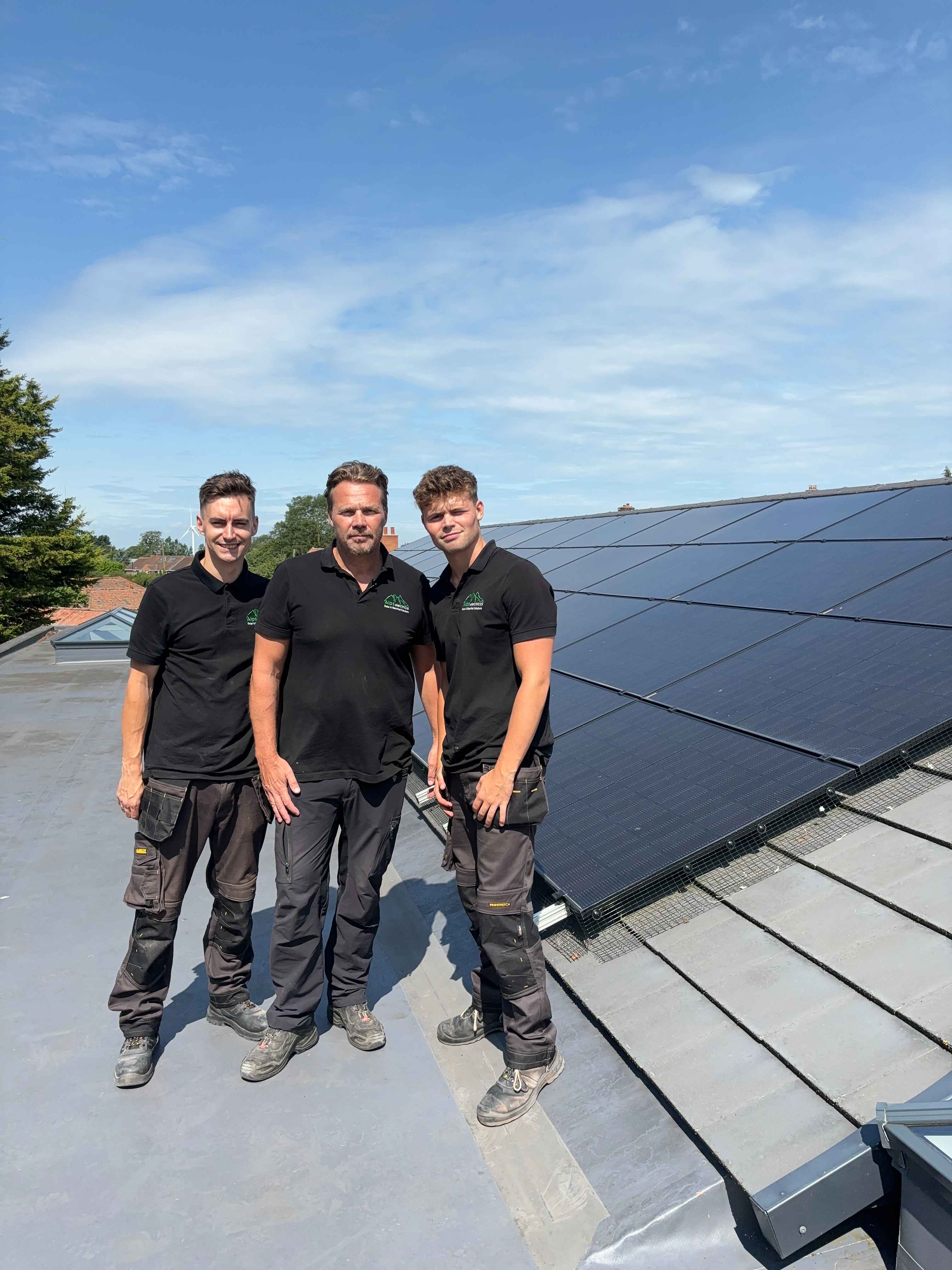
Commercial Solar Installation for Businesses
MCS certified, award-winning installation by ALPS Electrical. 500+ five-star reviews on Checkatrade.


Quick answer
What is the ROI on commercial solar for UK businesses in 2026?
Commercial solar installations typically pay back in 3-5 years for SMEs and 4-7 years for larger arrays. A 30kWp roof system on a small industrial unit costs around £30,000 with a £5,500-£7,500 annual energy bill saving. Capital Allowances (Annual Investment Allowance or 50% First-Year Allowance) often deduct the full installed cost from year-one corporation tax. Saltburn Golf Club is one of our flagship installations — case study available.
Why Businesses Are Investing in Solar
50%+
Price rises since 2021
70–90%
Commercial self-consumption
25–35p
Per kWh you offset
Commercial electricity prices have increased by over 50% since 2021, and businesses across the North East are turning to solar as a practical, financially compelling way to regain control over their energy costs. Unlike residential installations where homeowners might use 30-40% of their solar generation directly, commercial properties typically consume 70-90% of what their panels produce during working hours. This high self-consumption rate is what makes commercial solar such a strong investment — you are offsetting electricity you would otherwise buy at 25-35p per kWh.
ALPS Electrical designs and installs commercial solar systems for businesses of all sizes across Teesside, the North East, North Yorkshire and beyond. From small workshops and offices through to large industrial units, warehouses and leisure facilities, we provide turnkey installations from initial feasibility through to commissioning, G99 grid connection and ongoing monitoring.
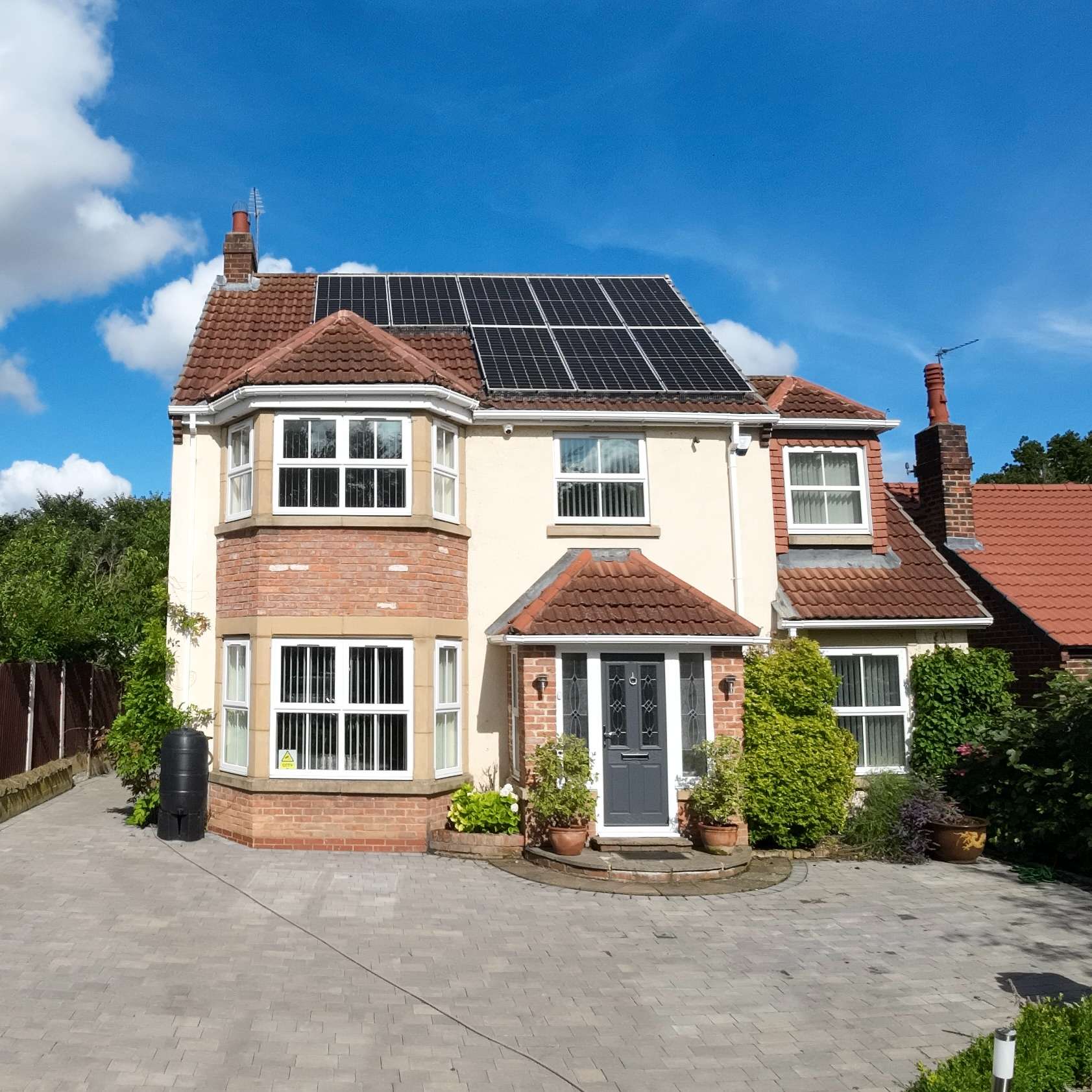
Aerial view of a completed ALPS Electrical solar installation
Return on Investment for Commercial Solar
50kW System — Typical Commercial ROI
£35–45k
System cost
£10–14k
Annual savings
3–4 yrs
Simple payback
25+ yrs
Free electricity after
The financial case for commercial solar is stronger than it has ever been. A typical commercial system delivers a return on investment within 3 to 5 years, with the panels continuing to generate free electricity for 25 years or more beyond that point.
For larger systems of 100kW or more, the economics improve further due to economies of scale in both equipment and installation costs. We have installed systems up to 200kW on single commercial sites and can design systems to match any roof space and energy demand profile.
3-5 yrs
Typical payback for commercial solar
After payback, your system generates free electricity for 25+ years
Electricity Price Hedging
Beyond direct savings, commercial solar provides an effective hedge against future electricity price increases. Once installed, your solar generation cost is effectively fixed at zero for the lifetime of the system. Every penny increase in grid electricity prices makes your solar investment more valuable. For businesses planning 5, 10 or 20 years ahead, this price certainty is a significant strategic advantage.
Capital Allowances and Tax Benefits
The UK government offers generous tax incentives that significantly improve the financial return on commercial solar investment. Understanding these allowances can reduce the effective cost of your installation by 25% or more.
Full Expensing
Deduct 100% of the cost from taxable profits in the year of purchase. At 25% corporation tax, a £40,000 system effectively costs £30,000.
Immediate tax saving
Annual Investment Allowance
For sole traders and partnerships — deduct the full cost up to £1 million per year. Solar panels, inverters, mounting and batteries all qualify.
Up to £1m per year
Enhanced Capital Allowances
Solar PV is listed on the Energy Technology List. Write off the full cost in year one, improving cash flow versus writing-down allowances over several years.
First-year write-off
ESOS Compliance
The Energy Savings Opportunity Scheme (ESOS) requires large enterprises (those with 250 or more employees or annual turnover exceeding £44 million) to carry out energy audits every four years. Installing solar panels directly contributes to your ESOS compliance by demonstrating active investment in energy efficiency measures. For businesses approaching ESOS compliance deadlines, a commercial solar installation provides both a tangible reduction in energy consumption and documented evidence of your commitment to energy efficiency.
Commercial Building Types We Work With
Warehouses & Industrial Units
Large flat or low-pitch roofs, expansive unshaded areas, 50-200kW+ systems. Non-penetrative clamp mounting on metal profile roofing. Structural loading assessments included.
Offices & Business Parks
Flat roofs with daytime demand perfectly matching solar generation. Air conditioning, IT, lighting and kitchen loads during peak solar hours. Multi-let metering solutions available.
Retail & Hospitality
Refrigeration, HVAC, lighting and cooking are energy-intensive loads running during peak solar hours. See our Saltburn Golf Club case study for hospitality savings in action.
Schools & Community Buildings
Large, suitable roof areas with access to additional funding streams. Educational value alongside financial savings. See our dedicated solar for schools page.
The Installation Process for Businesses
Commercial solar installation follows a structured process designed to minimise disruption to your business operations.
We begin with a free site survey where we assess your roof space, orientation, structural suitability and electrical infrastructure. We review 12 months of electricity bills to understand your consumption profile and design a system that maximises self-consumption. You receive a detailed proposal including system design, projected generation, savings forecast, payback calculation and Capital Allowance benefits.
Once you approve the proposal, we handle the G99 grid connection application to Northern Powergrid (required for all commercial systems), any necessary structural assessments, and the installation schedule. Most commercial installations take 1-2 weeks depending on system size, and we can schedule work around your business hours to avoid operational disruption.
G99 Grid Connection
All commercial solar systems require a G99 application to the Distribution Network Operator (Northern Powergrid in our region). This process involves submitting technical details of the proposed system and receiving approval for grid connection. The G99 process typically takes 8-12 weeks, and we submit the application as early as possible to avoid delays. For systems above 50kW, a more detailed grid study may be required, which we manage on your behalf.
Battery Storage for Commercial Properties
Adding battery storage to a commercial solar system allows you to store excess generation for use during evening or early morning hours, further increasing your self-consumption rate. Commercial battery systems also enable peak shaving — reducing your maximum demand charges by drawing from the battery during peak periods rather than from the grid. For businesses on half-hourly metered supplies with demand charges, the savings from peak shaving alone can justify the battery investment.
We install commercial battery systems from FOX ESS and Solis, ranging from 10kWh to 200kWh and above. The optimal battery size depends on your generation profile, consumption pattern and electricity tariff structure, and we model all of these during the design process.
Monitoring and Maintenance
Every commercial installation includes cloud-based monitoring that allows you to track generation, consumption and savings in real time. We set up alerts for any performance issues so that problems are identified and resolved quickly. We also offer annual maintenance packages that include panel cleaning, system health checks, inverter diagnostics and thermal imaging to ensure your system continues to perform at its best.
Get a Free Commercial Solar Survey
Whether you are a small business looking to reduce overheads or a large enterprise seeking ESOS compliance and significant energy cost reduction, ALPS Electrical can design a commercial solar system that delivers genuine return on investment. Call us on 01642 790 489 or complete the form on this page to arrange a free, no-obligation commercial solar survey. We will provide a detailed proposal with projected savings, payback period and Capital Allowance calculations tailored to your business.
Ready for a Free Survey?
No obligation. One of our MCS-certified engineers will assess your roof, run the numbers, and send you a full itemised quote.
500+ five-star reviews — "Absolutely first class from start to finish. Our electricity bills have dropped by over 80% since installation." — James W., Ingleby Barwick
Brands We Install
Watch Our Installations
Areas We Cover
Related Guides
Frequently Asked Questions
A typical 4kW residential solar panel system in the North East costs between £5,000 and £7,000 including installation and VAT at 0%. Larger systems of 6-8kW range from £7,000 to £10,000. Prices vary depending on panel brand, roof complexity and whether you add battery storage. ALPS Electrical provides free, no-obligation quotes with a full breakdown of costs and projected savings.
Most UK homes need between 8 and 16 solar panels depending on electricity usage, roof size and orientation. A typical 3-bedroom semi-detached house uses around 3,500kWh per year, which can be met by a 4kW system (8-10 panels). Larger detached properties with electric vehicles or heat pumps may need 6-10kW systems (14-24 panels). We conduct a detailed survey to recommend the optimal system size for your specific needs.
Yes, solar panels work effectively in the North East. While the region receives less sunshine than the south of England, modern high-efficiency panels like the Jinko Tiger Neo and JA Solar panels we install generate significant electricity even on overcast days. The North East receives approximately 1,100-1,200 kWh/m² of solar irradiance annually. Winter output is lower but panels still generate electricity — pairing with battery storage ensures you maximise every unit generated.
A standard residential solar panel installation typically takes 1-2 days. If you are adding battery storage, this may extend to 2-3 days. Commercial installations can take 1-2 weeks depending on system size. The full process from survey to switch-on usually takes 4-8 weeks, including the DNO notification or G99 application if required.
Most domestic solar panel installations fall under Permitted Development and do not require planning permission. However, you will need to apply if your property is listed, in a conservation area, or if panels will protrude more than 200mm from the roof surface. Ground-mounted arrays over 9m² also require permission. ALPS Electrical handles all planning considerations and will advise you during the survey.
The typical payback period for solar panels in the UK is 6-9 years based on current electricity prices. With battery storage enabling you to use more of your own generated electricity, payback can be faster. After the payback period, you enjoy free electricity for the remaining 20+ years of the panel warranty. Factors affecting payback include system size, electricity usage patterns, export tariff rates and whether you have an EV or heat pump.
Solar panels remain an excellent investment in 2026. With 0% VAT on residential solar, electricity prices remaining significantly higher than pre-2022 levels, and panel efficiency continuing to improve, the financial case is strong. A typical system saves £800-£1,200 per year on electricity bills, with additional income from export tariffs. Factor in rising electricity prices and the payback period continues to shorten.
We install premium tier-1 solar panels including Jinko Tiger Neo, JA Solar and Aiko. For inverters, we are approved installers for FOX ESS, Solis, SolarEdge, GivEnergy and Sigenergy. We select the best combination for each installation based on roof layout, shading, budget and performance requirements. All brands we use come with manufacturer warranties of 25-30 years on panels.
Yes, we can arrange finance options to spread the cost of your solar installation. Finance is subject to status and terms. Contact us for current finance rates and options. Many customers find that monthly finance payments are less than their previous electricity bills, making solar effectively cash-positive from day one.
Solar panels require minimal maintenance. An annual visual inspection and occasional cleaning (if panels become dirty from bird droppings, pollen or tree sap) is usually sufficient. Inverters may need replacement after 10-15 years. We offer maintenance packages including panel cleaning, system health checks, inverter diagnostics and bird proofing. We also service systems installed by other companies.
Middlesbrough receives approximately 1,150 kWh/m² of solar irradiance annually. A 4kW solar system on a south-facing Middlesbrough roof generates 3,450-3,750 kWh per year. This is sufficient to cover the majority of a typical household's daytime electricity consumption and generate meaningful export income via the Smart Export Guarantee.
York and Harrogate receive approximately 1,100-1,200 kWh/m² of solar irradiance per year. A 4kW south-facing system in the York or Harrogate area generates 3,400-3,800 kWh annually. The Vale of York benefits from slightly lower cloud cover than the Pennines, making it one of the better solar areas in Yorkshire.
Teesside and North Yorkshire have very similar solar resource — both averaging 1,100-1,200 kWh/m² annually. A 4kW system will generate approximately 3,400-3,800 kWh per year in either region. The main variable is roof orientation and local shading, not the geographic location within the North East or North Yorkshire.
Yes. Farm solar installation is a significant part of our work. We install solar on grain store roofs, Dutch barns, livestock buildings and other agricultural structures across County Durham, North Yorkshire and Teesside. Agricultural solar qualifies for Capital Allowances, making the tax-adjusted payback period significantly shorter than domestic installations. Contact us for a free agricultural solar assessment.
It depends on the specific property. Most conservation area properties can have solar panels on non-principal elevation roofs (typically the rear) under Permitted Development. However, panels visible from the public highway on a principal elevation may require planning permission. Properties in Yarm High Street conservation area or Guisborough town centre are subject to stricter rules. We advise on planning requirements during every free survey.
Why book commercial solar installation with ALPS Electrical
Most quotes for this service come from three places — regional family-run specialists (us), national MCS franchises, or sole-trader cheap quotes. Here's the trade-off.
| Feature | ALPS Electrical Family-run local | National installer e.g. franchise | Cheap quote Sole trader |
|---|---|---|---|
| MCS certified Required for 0% VAT + Smart Export Guarantee | |||
| NAPIT registered Electrical regs compliance + Building Notice | Some | ||
| Tesla Certified Installer Direct Tesla support + Powerwall stock priority | |||
| Local survey + design Owner-led, not subcontracted | Sometimes | ||
| Fixed written price No surprise extras on the day | |||
| Single installer team Same team designs + installs + commissions | Subcontracted | ||
| Same-day digital cert MCS / EICR / DNO docs by email same day | |||
| In-house aftercare One number to call for life of system | Call-centre | ||
| 500+ verified reviews Checkatrade + Google, real customers | 500+ | Mixed | Few |
| Tesla Powerwall stock Direct Tesla allocation, no 6-month waits |
ALPS Electrical
Family-run · local · Tesla Certified
- MCS certified
- NAPIT registered
- Tesla Certified Installer
- Local survey + design
- Fixed written price
- Single installer team
How we deliver every commercial solar installation
A structured process refined over 500+ installations. MCS standards, NAPIT-registered team, fixed pricing — every job.
-
Free site survey
60-90 minWe visit your property, assess the existing electrical setup, take measurements and photos, and discuss exactly what you want. No commitment, no pushy sales.
-
Custom written proposal
24-48 hrsYou receive a detailed itemised quote within 24-48 hours covering system design, installation plan, fixed price and projected savings or compliance outcome.
-
Installation day(s)
1-3 daysOur NAPIT-registered installers carry out the full work. We turn up when we say we will, in branded vehicles, tidy as we go, and complete most domestic jobs in a single day.
-
Commissioning & handover
Same dayWe test every circuit, set up the monitoring app where applicable, walk you through how everything works, and hand over your certificates (MCS, NICEIC, NAPIT or DNO as applicable).
-
Lifetime aftercare
OngoingWorkmanship warranty plus manufacturer guarantees (25 years on panels, 10 years on Tesla Powerwall, 10 years on most batteries). One number to call if anything needs attention — no third-party hand-offs.
Areas ALPS Electrical cover
Award-winning, MCS & NAPIT-certified solar, battery, EV & electrical installers across Teesside, County Durham & North Yorkshire — including domestic electrician North East, solar panels Teesside, solar panel installers Middlesbrough, solar panel installation Stockton-on-Tees, solar panels Darlington, solar panel installers Hartlepool, solar panel installation Durham, solar panels Redcar and solar panel installers Yarm. Free surveys, 500+ five-star reviews, Tesla-Certified.